


Why Indoor Air Quality Matters: 7 Reasons Why Your Home Needs Better Ventilation
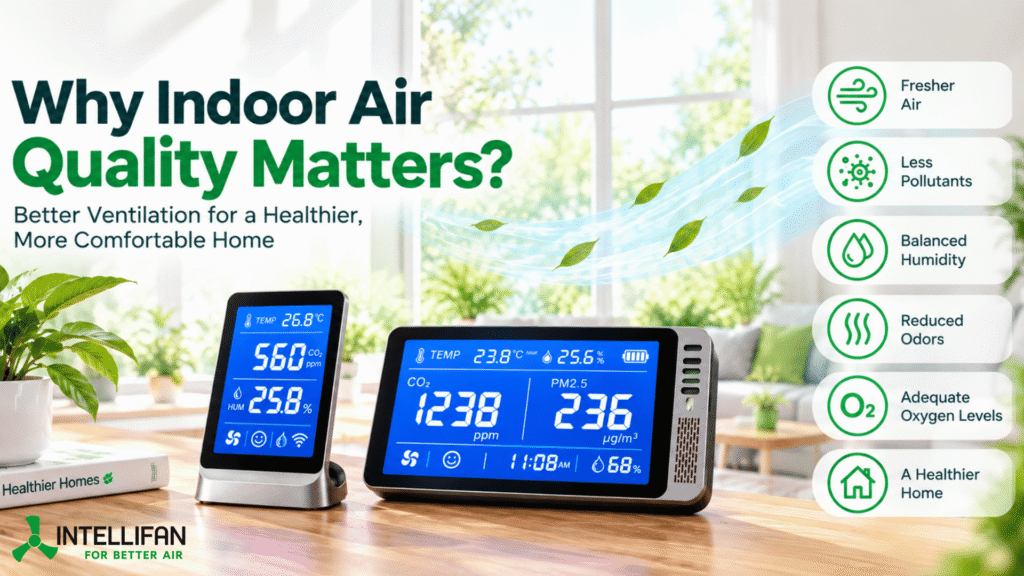
Indoor air quality matters because the air inside a home can contain pollutants, odors, moisture, particulate matter and other contaminants generated by everyday activities. When there is insufficient air exchange, these pollutants can remain indoors instead of being diluted or removed.
Indoor air quality and ventilation are closely connected, but they are not the same thing. Indoor air quality describes the condition of the air inside a building, while ventilation is one of the ways to manage that air by introducing outdoor air and exhausting indoor air.
Cooking, cleaning, bathing, using household products, smoking, occupancy and other activities can affect indoor air. At the same time, outdoor pollution can also enter a home.
Better indoor air quality usually requires a combination of approaches, including source control, appropriate ventilation, filtration, moisture management and monitoring.
This article explains seven reasons your home may benefit from better ventilation and how a properly designed home ventilation system can support better indoor air management.
What Is Indoor Air Quality?
Indoor air quality (IAQ) refers to the condition and characteristics of the air inside a building and the presence of pollutants or other factors that can affect indoor environmental conditions.
In a home, indoor air quality can be influenced by:
- Dust and particulate matter
- PM2.5
- Cooking emissions
- Smoke
- Household chemicals
- VOCs
- Cleaning products
- Moisture and humidity
- Carbon dioxide generated by occupants
- Outdoor pollutants
- Inadequate ventilation
Good indoor air quality is not achieved by a single product or technology. It depends on how pollutants are generated, controlled, removed, filtered and diluted within the building.
Looking for Indoor Air Quality Monitor in India? INTELLIFAN is the best Indoor Air Quality Monitor Manufacturer in India
Top 7 Reasons Why Indoor Air Quality Matters for Your Home
1. We Spend Most of Our Time Indoors
We spend a significant portion of our lives inside our homes. That makes the quality of the air we breathe indoors an important part of everyday well-being.
2. Indoor Air Can Contain Invisible Pollutants
PM2.5, VOCs, allergens, smoke and other contaminants can accumulate indoors. Many of these pollutants are invisible, so poor air quality isn’t always obvious.
3. Poor Ventilation Can Increase CO₂
People continuously exhale CO₂. In an occupied room with inadequate ventilation, CO₂ levels can rise, making the space feel stuffy and indicating that fresh-air exchange may be insufficient.
4. Cooking Adds More Than Just Odour
Cooking can release fine particles, smoke, gases and moisture into your home. Effective kitchen exhaust and adequate replacement air are important for managing these emissions.
5. Moisture Can Affect Your Indoor Environment
Bathrooms, kitchens and everyday activities generate moisture. Inadequate ventilation can allow humidity to persist, creating conditions that may contribute to dampness and mould growth.
6. Indoor Air Quality Can Affect Comfort & Well-Being
Poor indoor air quality can be associated with symptoms such as irritation, headaches and respiratory discomfort. Good ventilation and appropriate filtration can help create a more comfortable indoor environment.
7. Clean Air Isn’t Always Fresh Air
An air purifier can filter pollutants from recirculated indoor air, but it doesn’t necessarily provide outdoor-air ventilation. Ventilation brings in outdoor air, helping dilute CO₂ and stale indoor air.
Your home is designed for comfort. Make sure the air inside is designed for health too.
Good Indoor Air Quality starts with good ventilation.
What Are the Signs Your Home Needs Better Ventilation?
There is no single sign that proves a home requires a new ventilation system, but several conditions can indicate that air exchange should be evaluated.
Common signs include:
- Rooms frequently feel stuffy
- Persistent indoor odors
- Condensation on windows
- Excess indoor humidity
- Moisture lingering after bathing
- Cooking odors spreading through the home
- Poor airflow in closed rooms
- Bathrooms remaining humid after use
- Bedrooms feeling stale after overnight occupancy
- Windows and doors remaining closed most of the day
These conditions can have multiple causes, so they should not automatically be attributed to poor ventilation.
A proper assessment should consider the building, room use, airflow, moisture sources and existing HVAC equipment.
Ventilation vs Air Purifier: What’s the Difference?
Ventilation and air purification are often discussed together, but they are not the same.
| Air Purifier | Ventilation System |
| Primarily filters indoor air | Exchanges indoor and outdoor air |
| Usually recirculates room air | Can supply outdoor air |
| Can reduce selected airborne pollutants | Can dilute and remove indoor air pollutants |
| Does not inherently provide outdoor air | Designed for air exchange |
| Depends on filter performance | Depends on airflow and system design |
How to Improve Indoor Air Quality at Home
Improving indoor air quality usually requires more than one action.
1. Control Pollutants at the Source
Reduce unnecessary sources of indoor pollution wherever practical.
2. Use Kitchen and Bathroom Exhaust
Exhaust fans can remove moisture, odors and pollutants close to where they are generated.
3. Improve Outdoor-Air Ventilation
Use natural or mechanical ventilation where additional outdoor air is required.
4. Maintain Ventilation Equipment
Keep fans, ducts, grilles and filters maintained according to the equipment requirements.
5. Use Appropriate Filtration
Select filtration based on the pollutants and airflow requirements of the application.
6. Control Moisture
Address leaks, condensation and moisture sources instead of relying only on ventilation.
7. Replace Filters as Recommended
Filter performance can decline as filters become loaded with dust and particles.
8. Monitor Indoor Air Quality
Where useful, IAQ monitors can provide information about parameters such as CO₂, PM2.5, temperature and humidity.
9. Avoid Unnecessary Indoor Pollution
Source control can reduce the amount of pollution that ventilation and filtration need to manage.
10. Consider a Dedicated Fresh Air System
If a home has limited natural air exchange, a dedicated fresh-air ventilation system may provide more controlled outdoor-air supply.
Indoor Air Quality Monitoring
Ventilation works best when you understand the conditions you are trying to manage.
An indoor air quality monitor can provide useful information depending on the device and sensors included.
What Can an Indoor Air Quality Monitor Measure?
Depending on the model, an IAQ monitor may measure:
- CO₂
- PM2.5
- Temperature
- Relative humidity
- VOCs
- Other indoor air parameters
Monitoring does not replace ventilation or filtration. Instead, it can help building occupants understand indoor conditions and identify when further evaluation may be useful.
A practical indoor air management cycle is:
Measure → Identify → Ventilate → Filter → Monitor
When Should You Consider a Fresh Air Ventilation System for Your Home?
A dedicated fresh air ventilation system for home may be worth evaluating when:
- Windows are generally kept closed
- Rooms are heavily air-conditioned
- Natural ventilation is inconsistent
- Bedrooms become stuffy overnight
- Home offices have prolonged occupancy
- Basements have limited outdoor-air access
- Indoor odors persist
- Indoor moisture needs better management
- Filtered outdoor air is required
- The building needs controlled supply and exhaust airflow
The system should be selected according to actual airflow requirements rather than simply choosing a fan based on room size.
Choose the Right Ventilation System with INTELLIFAN
INTELLIFAN, from Greenland Solutions, focuses on air movement, ventilation, fresh-air supply, filtration and indoor air quality solutions for residential, commercial and other applications.
Its ventilation product range includes:
- Fresh Air Ventilation Systems
- Energy Recovery Ventilators
- Mixed-Flow Inline Duct Fans
- Centrifugal Inline Duct Fans
- Exhaust Fans
- Ventilation Accessories
- Indoor Air Quality Monitors
For a home ventilation project, different components can serve different functions. A fresh-air unit can provide outdoor-air supply, filtration can help remove selected airborne particles, inline or centrifugal fans can support ducted airflow, and grilles or diffusers can distribute air within the space.
The appropriate system should be selected according to factors such as:
- Required airflow
- Room size
- Occupancy
- Duct length
- Static pressure
- Filtration requirements
- Outdoor air conditions
- Building layout
- Application
The goal is not simply to add a fan, but to develop an airflow strategy that matches the needs of the space.
Looking for Best Ventilation Guide on Ventilation Systems?
What Is a Fresh Air System? | What is an Energy Recovery Ventilator (ERV)? | Fresh Air System vs Air Purifier | Energy Recovery Ventilator vs Fresh Air System